
Maldives weather in Addu at a glance
The Addu Atoll lies at the southern end of the Maldives. Daytime highs stay close to 30 to 32 °C in every month, and lows sit around 24 to 25 °C. The difference between months is rain, not temperature. Pack for sun and for showers whenever you come.
The figures on this page are long-term monthly averages for Gan. They describe what is typical, not what will happen on your dates. Wind and rain also shape your plans on the water, so read the page together with the boat excursions and sunset cruises on offer.

Boat trips and excursions in the Addu Atoll
Snorkeling, sunset and dolphin cruises, diving and day trips, with live prices and availability.
Climate by month in Gan
Long-term averages for 1981 to 2000. Rainfall is the average monthly total.
| Month | Average high | Average low | Rain |
|---|---|---|---|
| January | 30.7 °C | 24.5 °C | 234.2 mm |
| February | 31.1 °C | 25.1 °C | 110.4 mm |
| March | 31.5 °C | 24.7 °C | 168.0 mm |
| April | 31.6 °C | 25.0 °C | 159.0 mm |
| May | 31.3 °C | 24.9 °C | 232.0 mm |
| June | 31.2 °C | 24.9 °C | 151.1 mm |
| July | 30.8 °C | 24.4 °C | 183.8 mm |
| August | 30.7 °C | 24.1 °C | 192.6 mm |
| September | 30.5 °C | 24.0 °C | 194.0 mm |
| October | 30.4 °C | 24.1 °C | 273.7 mm |
| November | 30.4 °C | 24.2 °C | 172.7 mm |
| December | 30.3 °C | 23.9 °C | 236.3 mm |
Highs and lows are averages of daily maximum and minimum temperatures, not records. In this series February has the least rain and October the most, followed by December, January and May. February is no guarantee of dry days. For travelers who want the lowest rainfall, February is the usual pick.
The two monsoons
A countrywide pattern, not a day-by-day rain calendar.
Southwest monsoon
It usually runs from mid-May to November. In the Gan series, October, at the end of this season, is the wettest month, and May is also wet.
Northeast monsoon
It usually runs from January to March and is the drier period. The dry season is sometimes counted from December.
Transition months
April and December sit between the two monsoons. In the Gan series April is the warmest month with middling rain (159.0 mm), and December is one of the wetter months.
Seasonal outlooks
The national weather service publishes outlooks that vary from year to year. Check the latest outlook and a short-range forecast before you go.
Best time to visit the Maldives and Addu
The answer depends on what you want to do.
For the least rain
February is the driest month in the Gan series, and January to March is the usual dry period. January itself has high rainfall in the series, so do not treat the whole stretch as dry.
For diving and mantas
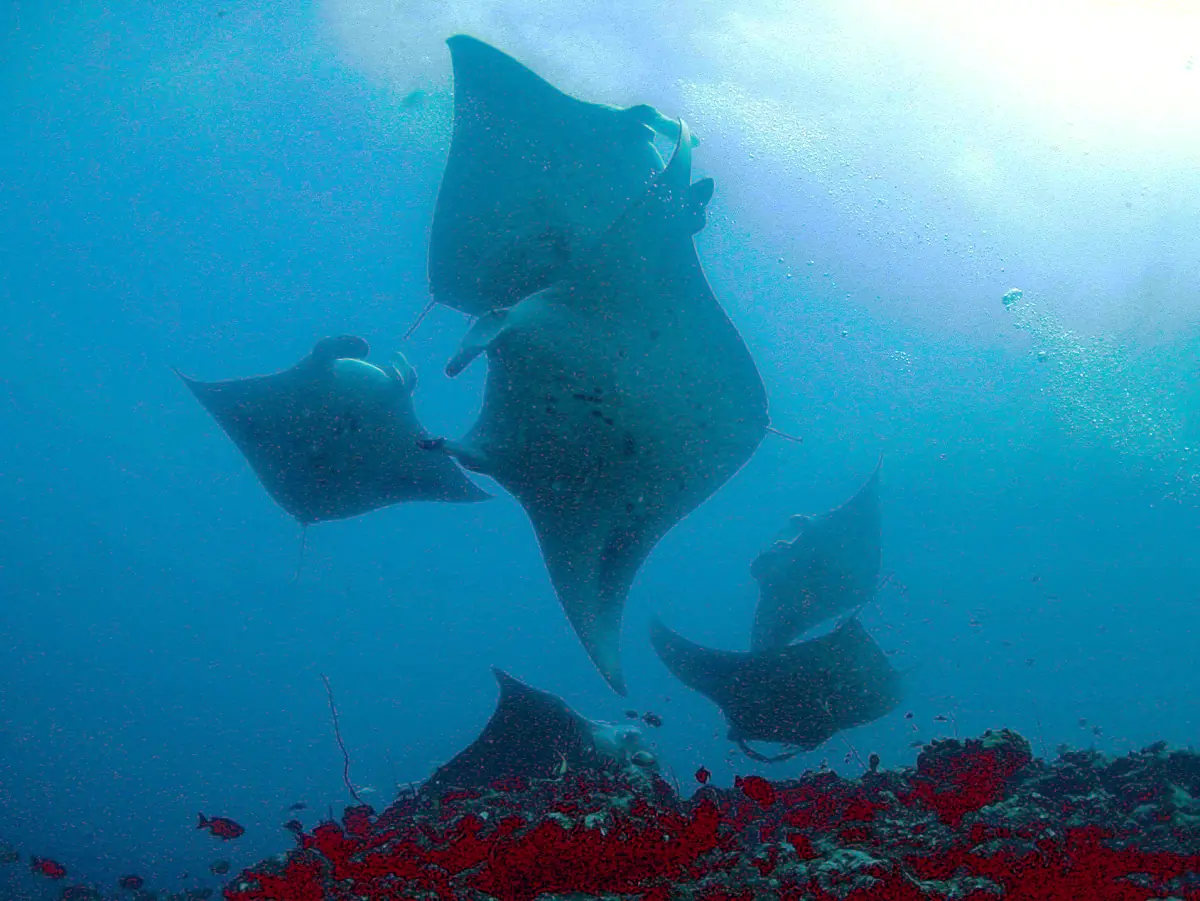
Manta encounters at Maa Kandu are possible through the year, with a preference for an incoming current. Sightings cannot be guaranteed in any month. See the diving page.
For boat trips and snorkeling
Choose the month by rain and sea conditions on the day, and ask the operator about the forecast. The snorkeling page covers currents and safety.
Rain and your schedule
Because rain falls in every month, keep one day free in your plan. Book weather-dependent trips such as a sunset cruise or a snorkel safari for the middle of your stay, so that you can move them if a day turns out wet or rough. Ask the operator how a postponement works before you pay.
For flights and planning
Once you have a month in mind, check the flights on the getting there page and the entry rules on the visa page.


Maldives weather in Addu: frequently asked questions
What is the best month to visit Addu?
For the least rain, February. The table shows 110.4 mm on average, the lowest in the series. That is an average, not a promise for any year.
When is the rainy season in Addu?
The southwest monsoon usually runs from mid-May to November. In the Gan series, October has the most rain, followed by December, January and May.
How hot is Addu?
Average daily highs range from 30.3 to 31.6 °C and average lows from 23.9 to 25.1 °C over the year.
Can I see mantas all year?
Encounters are possible through the year, but sightings cannot be guaranteed. Strong currents also matter, so ask for the conditions on your day.
Is it safe to swim?
Tidal currents can be strong. Swim only in supervised or marked areas, follow local warning signs and ask locally for the current conditions.
Is this an official weather service?
No. This is an independent travel guide, not run by the national weather service, Addu City Council, a resort or a tour operator.